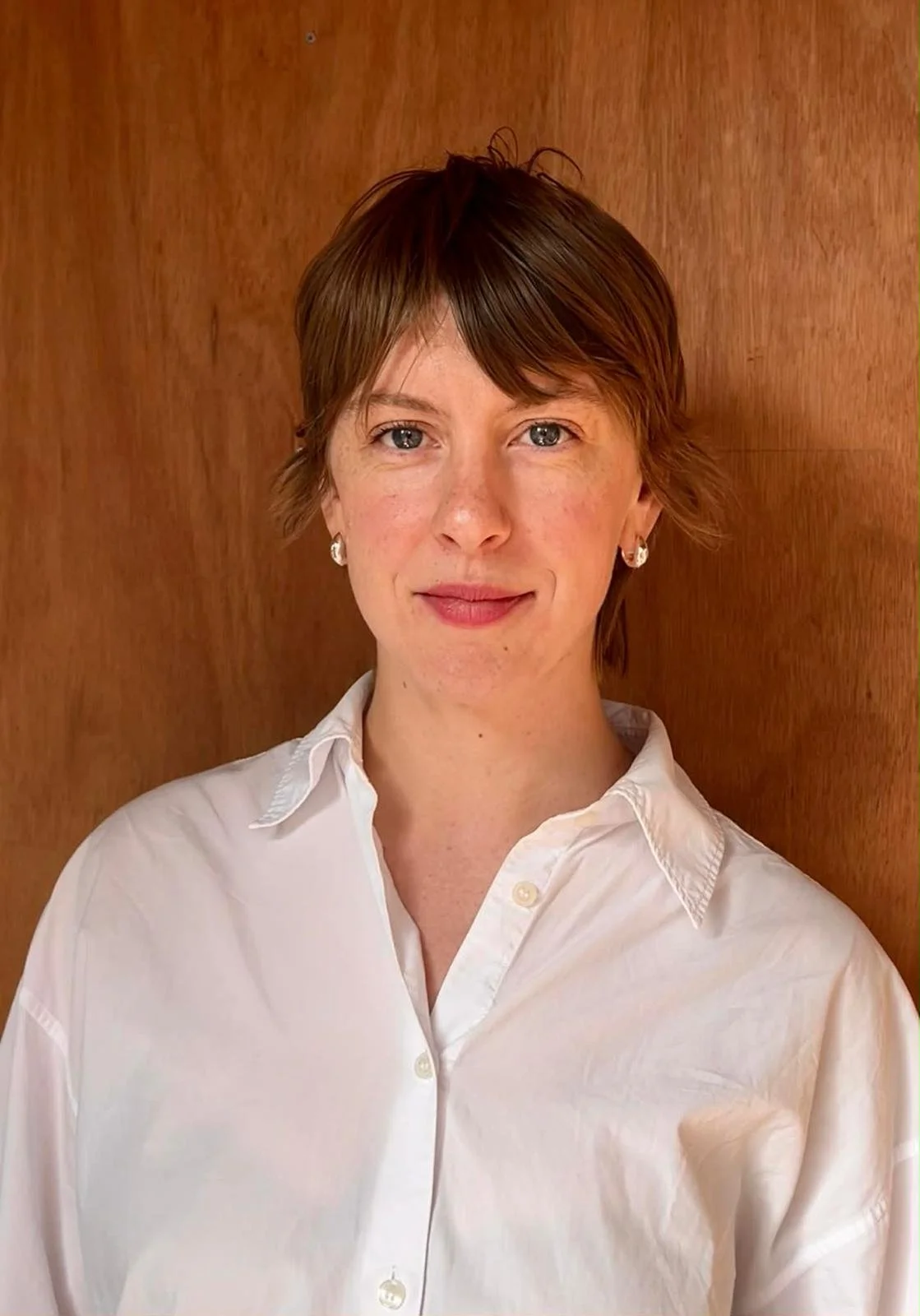
Gracie is an architectural designer and material researcher interested in the entanglement of the built and natural environment. Her practice draws on ecofeminism and bioregional design, working with earth, waste, and reclaimed materials, engaging with the messy and complex systems that are involved in the creation and maintenance of our living environments.
I came to Plumwood Mountain hoping to explore how to apply my ecofeminist ethic in the real world. After completing my Masters in Architecture in 2022 with the thesis project 'How do you build an eco feminist house?' I found myself two years later working in full time practice - with its capitalist land economics and globalised material supply chains - asking ‘can you be an ecofeminist architect working for the man?’ I had begun to doubt whether my philosophy of design, which Plumwood's work had such an important role in shaping, would remain just that, philosophy. The opportunity to spend time at Plumwood Mountain, the site where she wrote some of her most influential work, felt like coming straight to the source, where the ecofeminist rubber hits the proverbial road.
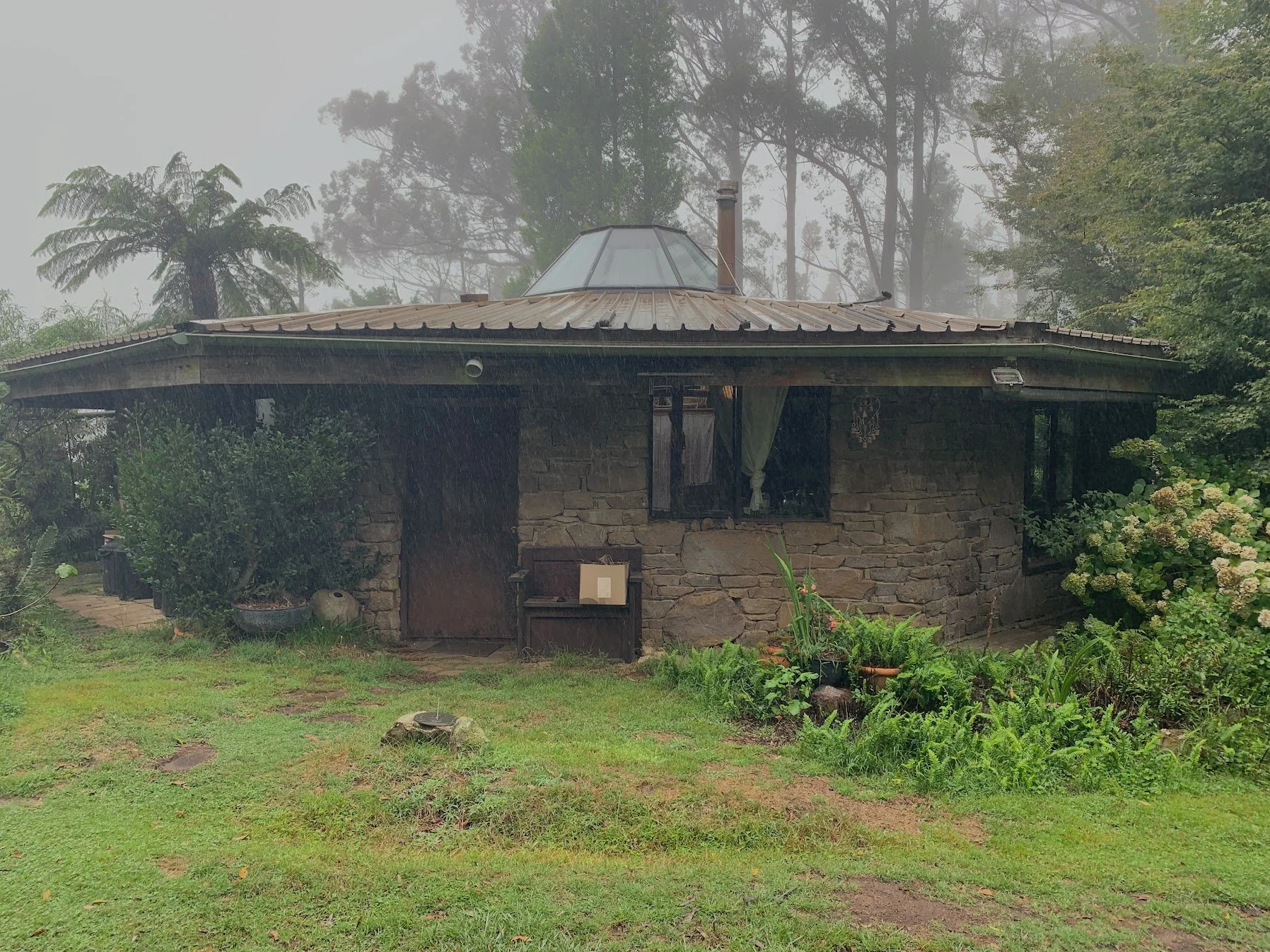
Plumwood house nestled into its surrounds (photo courtesy of Gracie O-Malley-Welby, 2026)
At Plumwood Mountain, I found the alignment of theory and practice evident everywhere, as well as its limits. The house is nestled into the mountain, its walls built from stone carried from the site by Val and Richard. And yet, as she put it herself, held together with bags and bags of cement. The roof beams are cut from small trees felled nearby, but the floor is quarried stone, brought in from somewhere else entirely. The house was and is, messy, alive, in a constant negotiation with the world around it. Her writing gave words to this ongoing dialogue. Flicking through one of her books and essays, and then jumping up to find a text she referenced, I unfolded more and more volumes in her library of over 3000 books, many of which are delightfully dog-eared, highlighted and annotated.
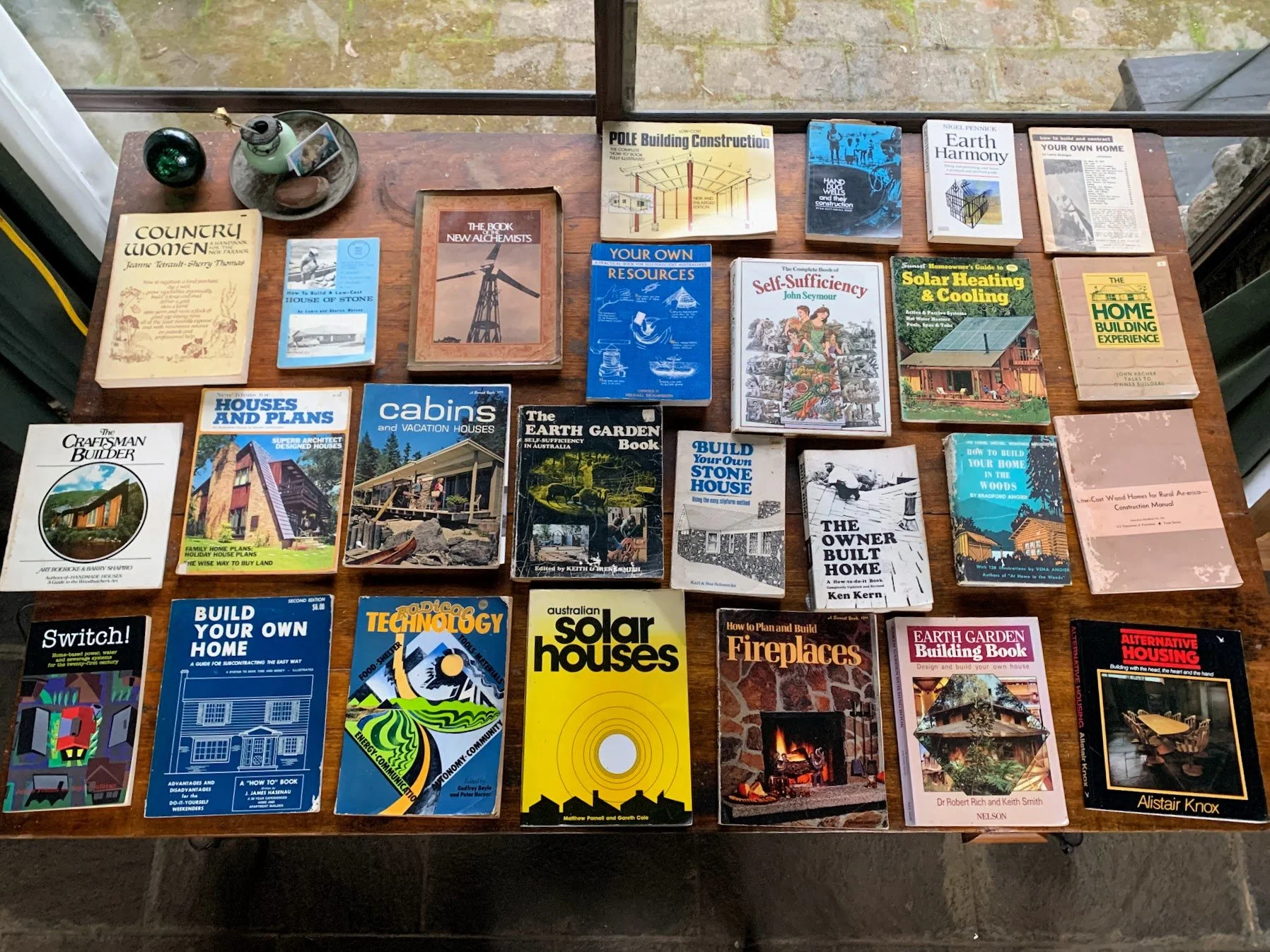
Val’s owner-builder book collection (photo courtesy of Gracie O’Malley-Welby, 2026)
Her writing buoyed me, reading her sentences in the very room where she wrote them, arguing against the same forces I have been chafing against. Her writing on the cultural importance of stones, read a few metres from the quarried floor and the stone walls Val and Richard carried up the mountain themselves gave me two ways of holding the same material in the same building, neither one resolving the other. It felt like permission to let my own materials stay unresolved too.
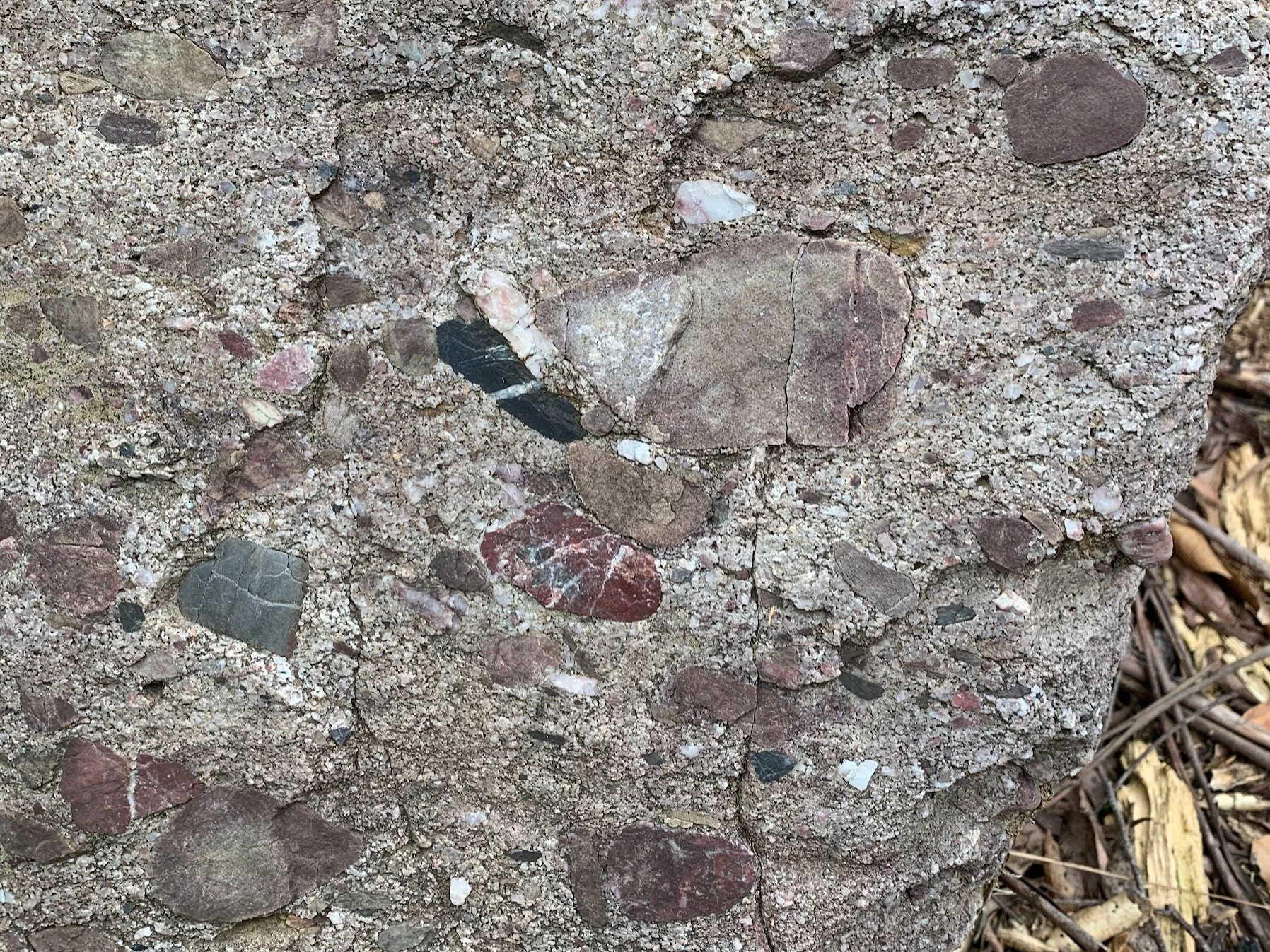
Conglomerate stone (photo courtesy of Gracie O’Malley-Welby, 2026)
I left the mountain with fragments, notes, ideas, sketches, traces, photographs… messy and incomplete, but finding their way back into my life and work as an ecofeminist with a job in architecture.
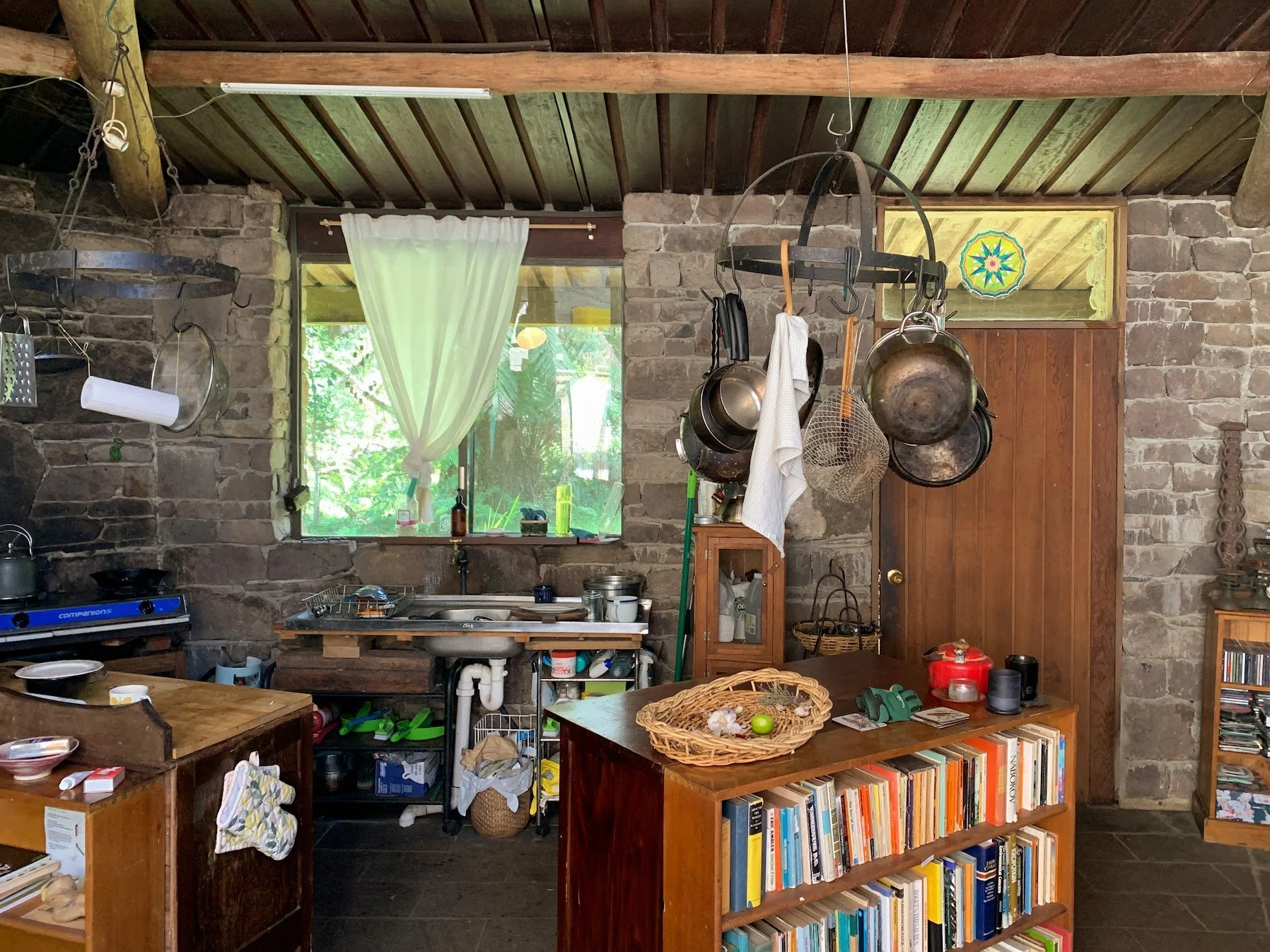
An ecofeminist kitchen (photo courtesy of Gracie O’Malley-Welby, 2026)